
How Richmond Resident Searches Begin
A Richmond resident search works best when the starting clue is named before the record is chosen. A street address points toward ParcelQuest Lite, CCMAP, the assessment roll, and city permits. A name points toward RecorderWorks, court entries, license records, or a historical directory. An old address calls for museum and library materials, maps, newspapers, and census schedules. An heir question may start with probate, an obituary, or unclaimed property rather than a current directory.
Those sources answer different questions. An assessment roll follows ownership and a tax mailing destination. A deed index follows named parties. A voter record confirms an authenticated voter or controlled file request, not an open street list. A directory places an adult at an address for one year. Collect the date, exact name form, address or parcel identifier, and reason the record matters.
- Start with the best known name, address, ZIP, or historic year, and note its source.
- Use the county property tools to connect a street address with an APN and parcel map.
- Check the relevant name index, court entry, license record, or voter-access route without treating a missing hit as proof.
- Move backward through directories, newspapers, maps, probate, and census material when the question is historical.
- Ask the custodian for an existing record when an online index stops, using the date range and identifier.
Richmond's Records Offices in Martinez
Richmond is an incorporated city in western Contra Costa County, but it is not a separate county records jurisdiction. Richmond keeps permits, code cases, engineering material, council records, and public correspondence; county offices centered in Martinez keep assessment, deed, tax, election, and Superior Court records; California agencies hold statewide vital, voter, license, and custody systems. A local records search may leave the city while the address stays fixed.
The Richmond street directory angle begins with the county Assessor and GIS tools, while the home search needs a wider handoff between custodians. The cards below identify the actual offices and their useful access channel. No street address or phone number is supplied where the research did not document one.
Contra Costa County Clerk-Recorder
Recorded documents, maps, vital copies, and name-indexed instruments
County offices in Martinez
Public counter, mail, and online index
Contra Costa County Assessor
APNs, parcels, assessment data, and the public roll
Online maps plus counter access
Owner names omitted from web parcel tools
Contra Costa Elections
Voter status and controlled-purpose voter-file access
California county election channel
Self-authentication or qualified request
Richmond Parcel Records on the Web
ParcelQuest Lite is the first stop when an address needs a county identifier. It accepts an APN or street address, while CCMAP adds parcel outlines, assessor-map PDFs, aerials, contours, building size, lot size, and radius selection. Vacant, shoreline, industrial, or unusual parcels may be easier to find by APN. Richmond postal wording is a clue, not proof of city jurisdiction.
County web property tools intentionally omit owner names. That is an access choice tied to statutory home-address protections, not a closed assessment roll. An owner or mailing-address question moves to the Assessor counter or a precise request. Mailing address is the tax-bill destination; situs is the physical parcel. Neither alone establishes occupancy.
| Field Label | Type | Required | Options / Format Notes |
|---|---|---|---|
| APN | Text | Alternative | Useful for vacant parcels or land without a situs address |
| Street Address | Text | Alternative | House number and street; some parcels lack a situs address |
| City | Text or dropdown | With address as needed | Use Richmond mailing wording cautiously |
| Search / Reset | Buttons | Required to act | Execute or clear the ParcelQuest Lite search |
A parcel result may show the APN, situs, use code, land and building area, assessed values, parcel-map link, and available characteristics. Save those fields before moving to deeds or permits. CCMAP shows adjacent polygons, but not a household roster.
Richmond's Current Directory Sources
No single current Richmond resident roll lists every person. Richmond directory work is best treated as a cross-source index that combines records made for different purposes and labels what each supports. The table separates ownership, recorded-party, civic, city, and professional evidence so an office list is not mistaken for occupancy.
| Source | Person or Address Evidence | Custodian | Access |
|---|---|---|---|
| Assessment roll | Owner and tax mailing destination | Contra Costa Assessor | Public counter or request; names suppressed online |
| RecorderWorks index | Parties to deeds, liens, maps, and notices | County Clerk-Recorder | Free name index from 1986 forward; copies ordered |
| Voter access | Authenticated status or qualified file fields | California SOS and Contra Costa Elections | Self-only or controlled statutory route |
| City permits and records | Applicants, parcel addresses, cases, and correspondence | City of Richmond | Online coverage and CPRA request channels |
| License and entity files | Licensee status or business affiliation | California state agencies | Free search; some copies may cost |
| Neighborhood councils | Public area contacts and meetings | City of Richmond | Public community information, not a private roster |
City staff directories identify officials in their public capacity. Neighborhood councils provide public boundaries, contacts, and meetings, not private membership. For a one-person question, an APN, case number, license number, or document number is more useful than a name alone.
Note: A current tax owner, a recorded party, a registered voter, and a directory resident can be different people recorded at different times.
Richmond Recorder Records Build a Party Trail
RecorderWorks supplies a free recorded-document name index from 1986 to the present. Search an individual or business name, narrow by document type or recording date, and save the document number, date, party role, and legal description. The index follows grantors, grantees, and other instrument parties. It is not a modern-address search, so the APN, lot, block, subdivision, or legal description must bridge a name result to Richmond land.
The sequence is current vesting owner, acquisition deed, seller as the next search name, then the prior deed. A lien, reconveyance, map, or notice may explain parcel history, but does not identify a resident alone. Images or certified copies are separate from the free index. Before 1986, cumulative grantor-grantee indexes and deed images require the Martinez counter.
The Contra Costa RecorderWorks search shows the kind of party-index channel that anchors a Richmond directory record trail.
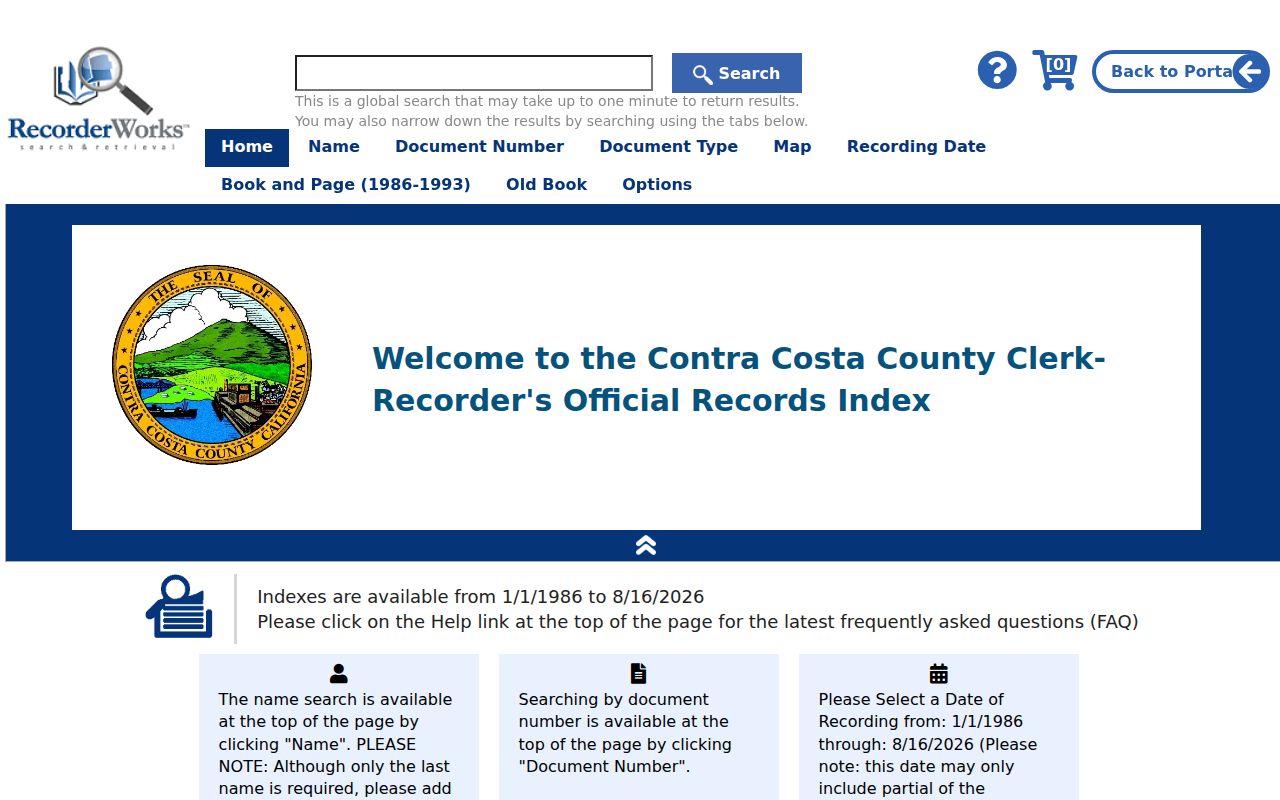
The screen finds a named instrument, not proof that a party lived at the situs. Compare its legal description and recording date with the parcel record.
Richmond Voter Records Are Personal
California My Voter Status authenticates the voter; it is not a public name or street directory. The form asks for first name, last name, full date of birth, and a California driver license or ID number or last four Social Security digits. An exact match can show registration, party, language, vote-by-mail or provisional status, polling information, election details, and guide delivery. A recent registration may need 24 hours before it appears.
A qualified requestor can seek voter data for election, scholarly, journalistic, political, or governmental purposes under Elections Code §2194. A specific-voter request uses full name, date of birth, county, and residence address; larger files follow the Secretary of State’s declaration rules. Participation history records an election in which a person participated, not ballot choices.
The California voter-status form makes the privacy boundary visible in its required fields.
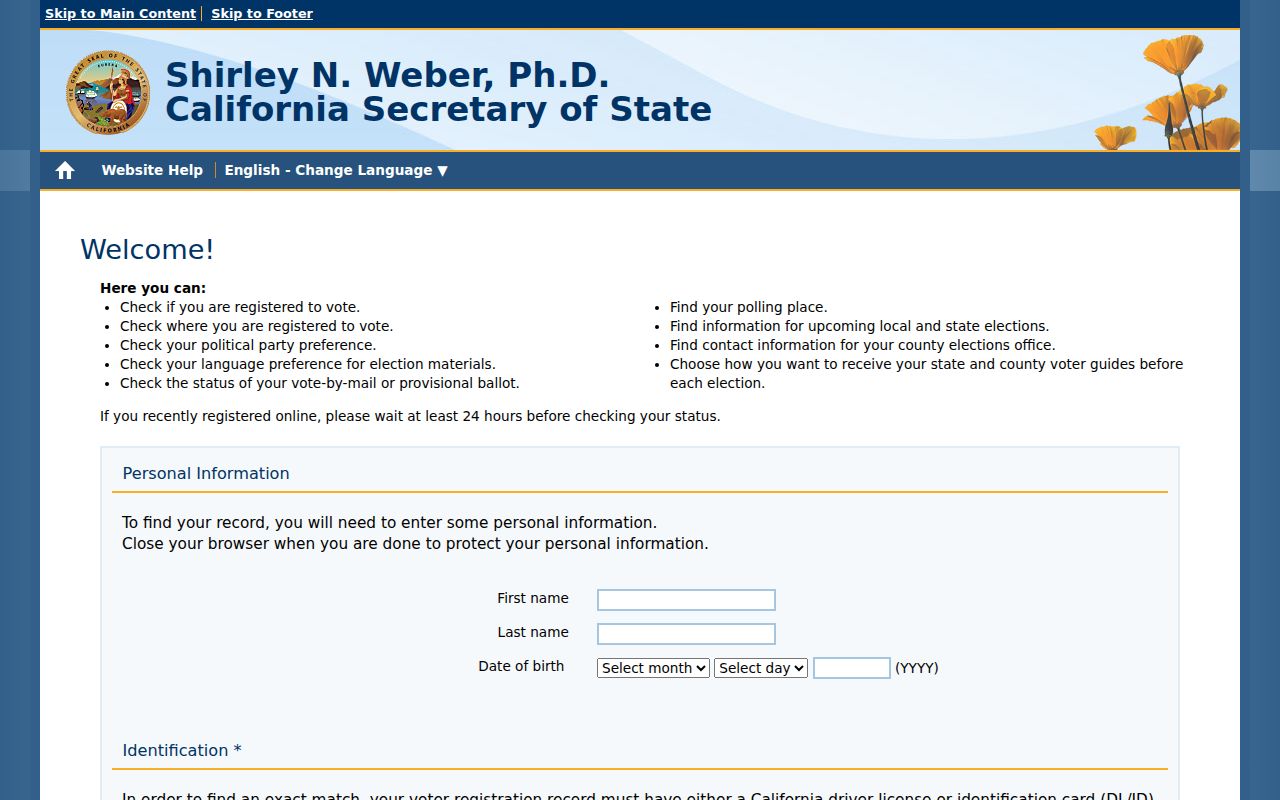
Government Code §7924.000 protects home street address, phone, email, precinct identifiers, prior registration data, license or ID number, Social Security number, and signature. A Richmond street search cannot be built by browsing My Voter Status.
Richmond Court Records Need Context
The Contra Costa Superior Court public case portal can return a case number, caption, party role, case type, filing events, hearings, and record-of-actions entries. Richmond matters commonly use the “RS” prefix, so a complete case number needs letters and digits. A separate traffic search accepts a case, citation, or party name, but inactive traffic cases older than three years do not display.
Online court information is an index and record of actions, not the whole file. Minutes, orders, filed documents, criminal information, and self-represented party addresses generally require Court Records or a copy request. Family, probate, sealed, confidential, juvenile, and adoption matters can be absent or redacted. Historic court and probate indexes add a physical fallback.
The Contra Costa Superior Court public portal is a useful first check, followed by the court counter or mail channel when the entry cannot answer the question. Federal matters follow a separate docket route.
Note: A missing Richmond court hit may reflect a sealed case, a retired traffic result, a location-prefix error, or a file that remains at the counter.
Richmond Vital Records Use Two Lanes
California vital records distinguish an authorized certified copy from an informational certified copy. An authorized copy follows an eligible class and sworn statement, while an informational copy is marked not valid to establish identity. Birth, death, public marriage, and divorce routes differ. Confidential marriage records, adoption files, and original birth records have separate restrictions.
The county Clerk-Recorder or local registrar can be faster for a known Contra Costa event. The California Department of Public Health application asks for record type, event date and place, names, relationship, purpose, copy type, signature, and payment. A missing index hit does not end the search. Newspapers, cemetery evidence, church registers, obituaries, probate, and historical collections can add a family trail.
The California vital-records application information sets out statewide eligibility and copy routes. On January 1, 2026, AB 64 raised state certified-copy fees to $31 for birth, $26 for death, $19 for marriage, and $18 for dissolution. The search fee can remain due even when no record is found.
Note: A certified record, an obituary, and cemetery evidence may describe one Richmond death while answering three different questions.
A Richmond Resident Match Needs Proof
A same-name result is a lead, not an identity match. Record the exact name form, middle initial, date, role, APN, case number, document number, license number, and entity. Two independent stable matches are a sensible minimum. A deed role with a legal description is stronger than a surname with a street. A case number with a filing date is stronger than a similar caption.
California license and business records can confirm a dated affiliation. The Department of Consumer Affairs search can show board, license type and number, status, dates, location, and public discipline where published. The Secretary of State business database connects an entity name or number with status, agent information, filings, and addresses. Those fields describe a license or entity, not a household.
A state unclaimed-property database may offer a last-reported address clue for an heir, but a claim requires proof and an old report is not present residence. Probate plus obituary research can reconnect heirs with family property or an unclaimed asset.
The California professional-license search illustrates a structured identity check.
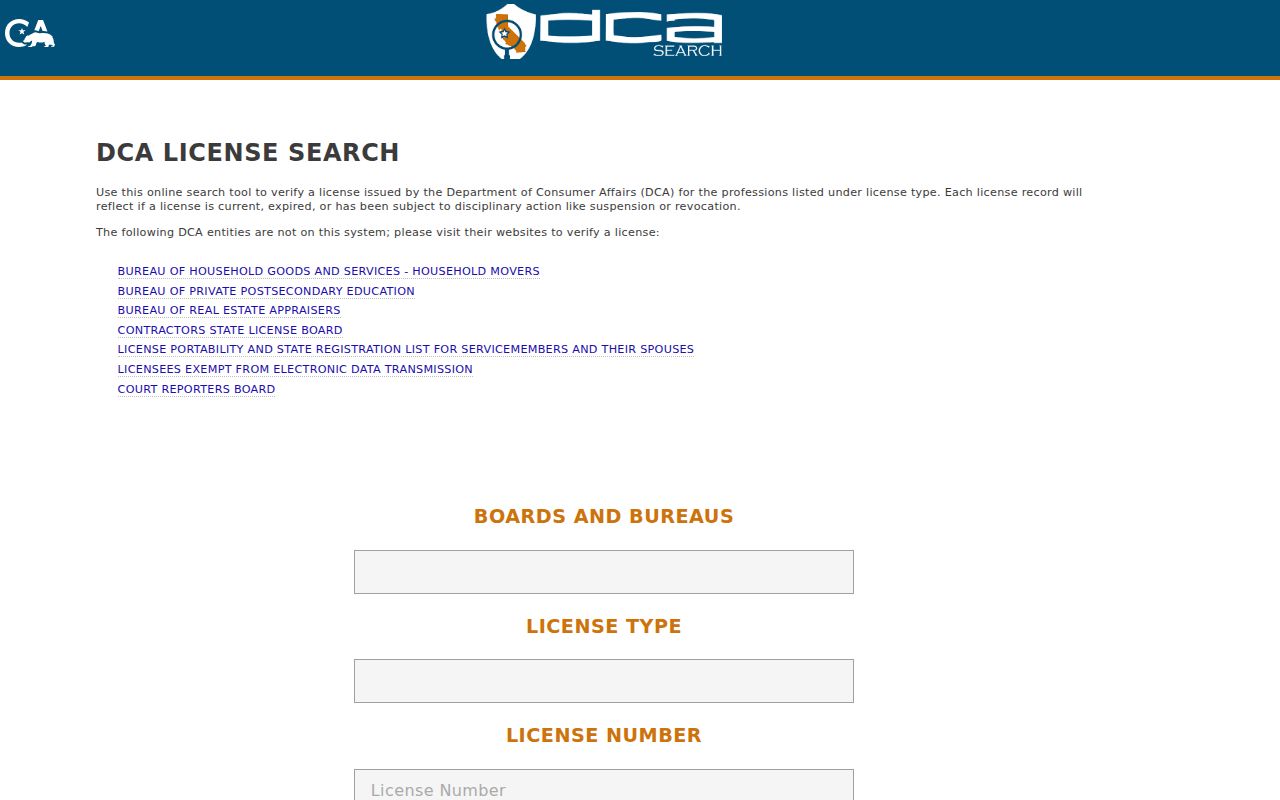
A license number and board status give a better cross-source anchor than a name. The same principle applies to a business entity or recorder instrument number.
The California business search shows a separate affiliation trail for a Richmond directory inquiry.
Business filings place a person in a dated public role, while FBN, city permit, and deed channels answer different questions about the same name.
Richmond's Historical Directory Trail
Richmond’s historical resident directories begin with a museum collection dating from 1907. Richmond Union High School yearbooks reach back to 1909. The Richmond Independent runs from 1912 to 1945, and Richmond Public Library holdings include the Richmond Record Herald from August 1913, plus yearbooks, photographs, books, and local-history links. These sources show households changing through industrial growth and wartime migration.
A directory entry may include a name, spouse or widow notation, occupation, residence address, later telephone detail, and a householder mark. An alphabetic section finds a name; a street or criss-cross section reverses the key to an address. Read abbreviation pages first. A directory places an adult or business at a date, not proof of title or current occupancy.
Digitized Richmond directories, school materials, and North Richmond images are linked through library resources, while the museum finding guide controls the exact volume list. The historical side of the Richmond residents directory belongs in the Richmond historical city directory treatment, including missing years, publisher changes, and household tracing.
Note: A directory disappearance can mean a move, death, name change, omission, or publication gap, so the next source should be chosen rather than assumed.
Offline Richmond Records Still Matter
Contra Costa County Historical Society collections supply the depth modern portals leave out. The society reports more than 9,300 indexed court files naming more than 61,000 people, over 1,700 maps, and about 20,000 cataloged images. Holdings also include assessment books from 1850 through 1910, court and probate files, naturalization cases from 1850 through 2008, newspapers, and physical indexes.
Newspapers, clipping files, microfilm, and demand-driven image archives can rescue a failed web search. A person tied to Richmond’s shipyards may appear in a yearbook, local notice, oral history, or photograph before a deed. Point Richmond house-history material, Rosie the Riveter collections, and school archives add context without becoming a current resident roll.
The Contra Costa Clerk-Recorder information page helps distinguish county-held records from historical collections that require a different visit or request.
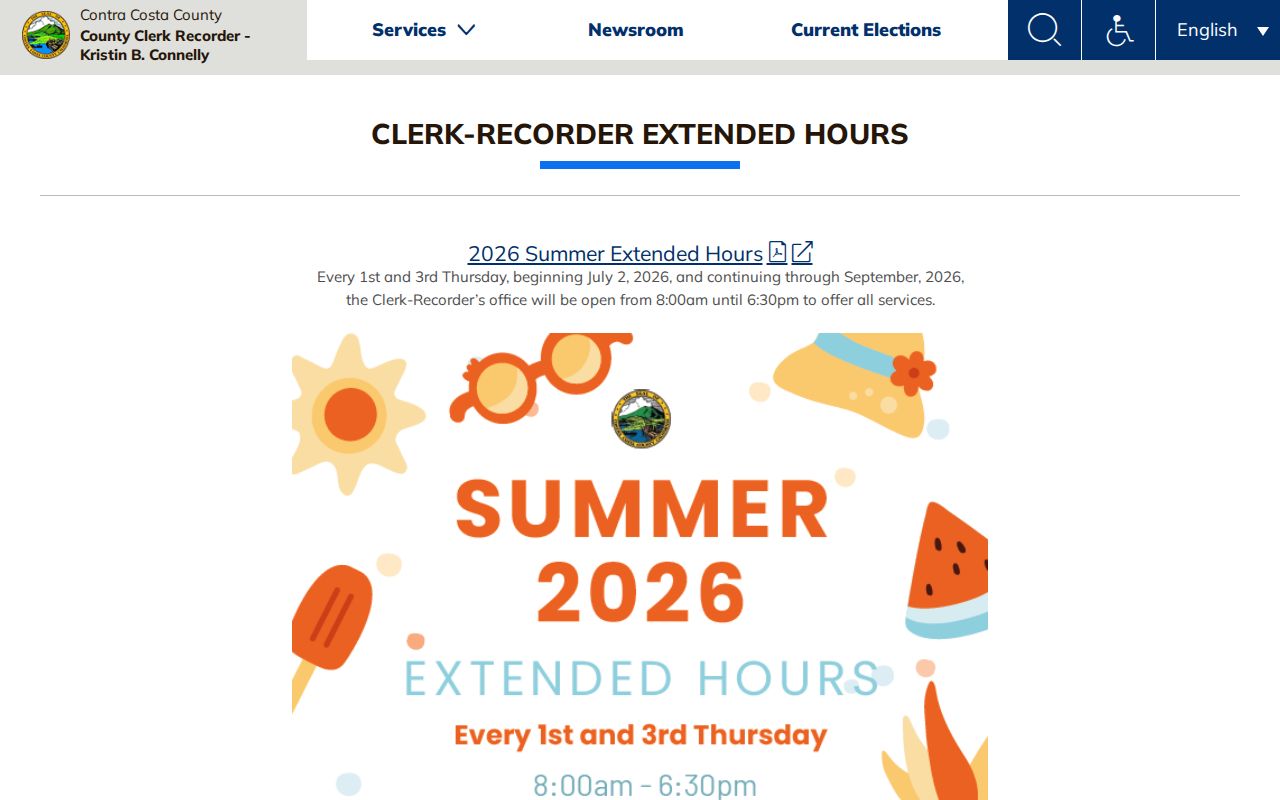
The image reflects the county-records side of the split. Historical indexes, newspapers, and fragile maps may remain with a library, museum, or historical society.
Richmond CPRA Requests Need Records
When an online portal stops, Richmond’s NextRequest channel accepts a California Public Records Act request, status messages, and agency correspondence. A strong request names an existing record, address or APN, date range, and department. Building, City Clerk, Police, and other custodians may hold different pieces. Describe the permit card, inspection history, code case, map, or correspondence sought rather than an open-ended question.
Richmond’s online building, code-enforcement, and engineering permit material begins in May 1998. Request older cards with current and historic street forms, APN, owner at the time if known, and approximate date. Ask for electronic copies in their existing format. Copyright, security, privacy, and other exemptions can require redaction, while segregable material should still be released.
The Richmond public-records request channel ordinarily has an initial determination within 10 calendar days, with a written extension of up to 14 days for unusual circumstances. Inspection is generally free; duplication costs may apply. The CPRA does not require a city to create a new list.
Protected Richmond Resident Data Has Limits
California privacy rules explain why a Richmond records search can end with no public name. Safe at Home participants can use a substitute mailing address and confidential voter route. Voter addresses, signatures, license identifiers, and Social Security information are restricted. DMV data, adoption files, confidential marriages, sealed cases, and protected court material have separate limits. Correct a source record with its custodian.
- Roll
- An official list for a defined purpose, such as assessment, taxation, or voter administration. It is not automatically a resident roster.
- Index
- A finding aid pointing to a record by name, date, number, or role. The image or file may still be restricted.
- Criss-cross directory
- A reverse section arranged by street address, connecting a house number with an adult, business, or nearby entry.
- Parcel
- A mapped land unit identified by APN and legal description. It may contain several dwellings or none.
These definitions keep a search from overstating a field. The safest conclusion is tied to purpose, date, custodian, and access rule. Privacy guidance gives consumers routes to correct, delete, or opt out of downstream uses, subject to public-record exemptions.
| Question | Official records | Commercial compilations |
|---|---|---|
| Origin | A named county, city, court, library, or state custodian | Mixed feeds with unclear timing |
| Verification | Record number, date, role, parcel, case, license, or copy route | Similar names may be merged |
| Best Richmond use | Family history, property curiosity, civic records | Only a lead needing confirmation |
| Wrong result | Contact the office that created the source | Use a separate correction route |
Lawful personal use. Richmond records may support family, property, historical, and civic research. Using public information to stalk, harass, threaten, or harm another person is prohibited and may violate California law.
Richmond's History Shapes Record Trails
Contra Costa records reach to 1850; Richmond incorporated in 1905 and grew through rail, port, refinery, Ford, and Kaiser shipyards. That history links 1907 directories, 1909 yearbooks, 1912 and 1913 newspapers, wartime oral histories, permits, and parcel maps.
Point Richmond, Atchison Village, the Iron Triangle, Santa Fe, Coronado, Pullman, Marina Bay, Hilltop, Richmond Annex, and North Richmond do not share one record story. North Richmond is unincorporated despite Richmond postal usage, and ZIP 94806 crosses city and unincorporated geography. Postal city, parcel, neighborhood council area, and municipal boundary are separate assertions.
Recent changes add a date layer: museum hours, historical indexing, refreshed court portals, Delete Act procedures, and vital-copy fees changed January 1, 2026 under AB 64. A reliable Richmond directory search records its date.